Muncie, Indiana
Burst Pipe Cleanup in Muncie, IN
A split supply line delivers clean water at full pressure into places that were never meant to hold it. The volume is often larger than what shows on the floor. Shut the water off first, then call.
Find the shutoff before you find the leak
People lose useful minutes hunting for the break instead of the valve. The fixture stop under a sink or behind a toilet handles a local failure. Anything larger, and anything inside a wall or ceiling, needs the main shutoff, usually where the service line enters the house near the meter or in the basement. If you manage property, knowing where that valve sits in each unit is worth more than any advice on this page.
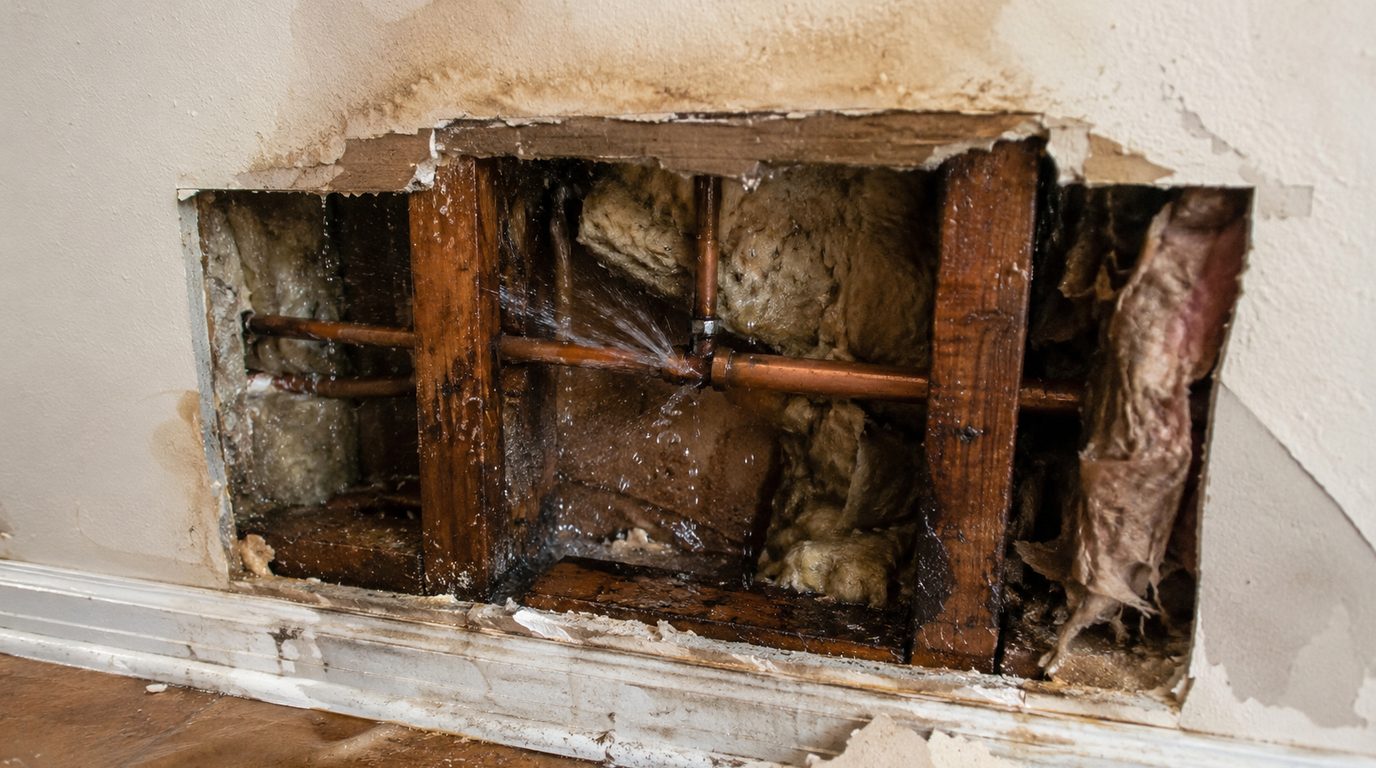
Cleanup after a pipe break
Supply water starts clean, which is the good news, and it stops being clean once it sits in contact with building materials and whatever was on the floor. The work is mostly about the path: water leaves the break, runs along framing, drops through penetrations, and shows up somewhere unrelated. Following that path is the difference between a dry building and a callback in a month.
Places a pipe break puts water
- Inside the wall cavity below the break, wicking upward into drywall
- Along the top plate and down an interior wall on the other side of the room
- Into insulation, where it holds moisture long after surfaces feel dry
- Through the floor into a lower unit, a basement, or a ceiling cavity
- Behind cabinets and under appliances that hide the wet floor beneath them
Frozen pipes and empty Muncie rentals
Central Indiana winters swing across the freeze line repeatedly, and the properties that suffer are the ones nobody is heating. A vacant unit between tenants, a house sitting empty over a semester break, or a rental where the heat was turned down to save money can freeze a line, split it, and then thaw while the property is still empty. The water runs unnoticed until someone opens the door.
For owners and managers, the practical takeaways are keeping some heat in vacant units through winter, knowing where each shutoff is, and having someone check empty properties after a hard freeze rather than after the thaw.
What to do before help arrives
- Close the main shutoff, then open a low faucet to drain pressure out of the system.
- Keep away from wet ceilings and any light fixture that has water above it, and leave those circuits off.
- Do not open walls looking for the break. Photograph what you can see and let the moisture readings decide where to open.
Our approach
Follow the water, not just the puddle
Confirm the source is off
Nothing else starts until the supply is isolated. A break that is still fed will outpace any equipment on site.
Trace the travel path
Readings follow the water along framing, through floor penetrations, and into adjacent rooms or units, so the drying area matches reality.
Open, dry, verify
Cavities holding water are opened in the least destructive place available, dried with directed airflow, and re-read until values hold.
Pipe let go and the water is off?
The next hour is about what it soaked, not what it looks like.
Questions after a pipe failure
The plumber fixed the pipe. Is that the end of it?
The plumber solves the leak; the water that already left the pipe is a separate problem. Repairing the line while leaving wet insulation and framing in place is how your home can develop odor and staining weeks later. Readings tell you whether anything is still holding water, and they take very little time.
A tenant found it after it ran all night. How bad is that?
Longer exposure means more absorption and a wider affected area, particularly downward through floors. It does not automatically mean demolition. It means the assessment covers more of the building, and more porous material is likely to be removed rather than dried in place.
How do I keep this from happening again in a vacant unit?
Keep enough heat on during freezing weather rather than shutting it off entirely, insulate lines running through unheated areas, and have someone check the home during and after cold snaps. Where a unit will sit empty for weeks in winter, shutting off and draining the water supply removes the risk entirely.