
Muncie, Indiana
Flooded Basement Cleanup in Muncie, IN
Below grade, water has nowhere to go and nothing to evaporate into. A basement dries slowly, holds humidity, and hides what it soaked. Tell us how deep the water is and what is stored down there.
Found water at the bottom of the stairs
The usual discovery in Muncie is not dramatic. Someone goes down with laundry and finds an inch across the low half of the floor, or a tenant reports a smell before anyone sees the water at all. By then it has been in contact with boxes, the base of the drywall, and whatever furniture was resting directly on the slab.
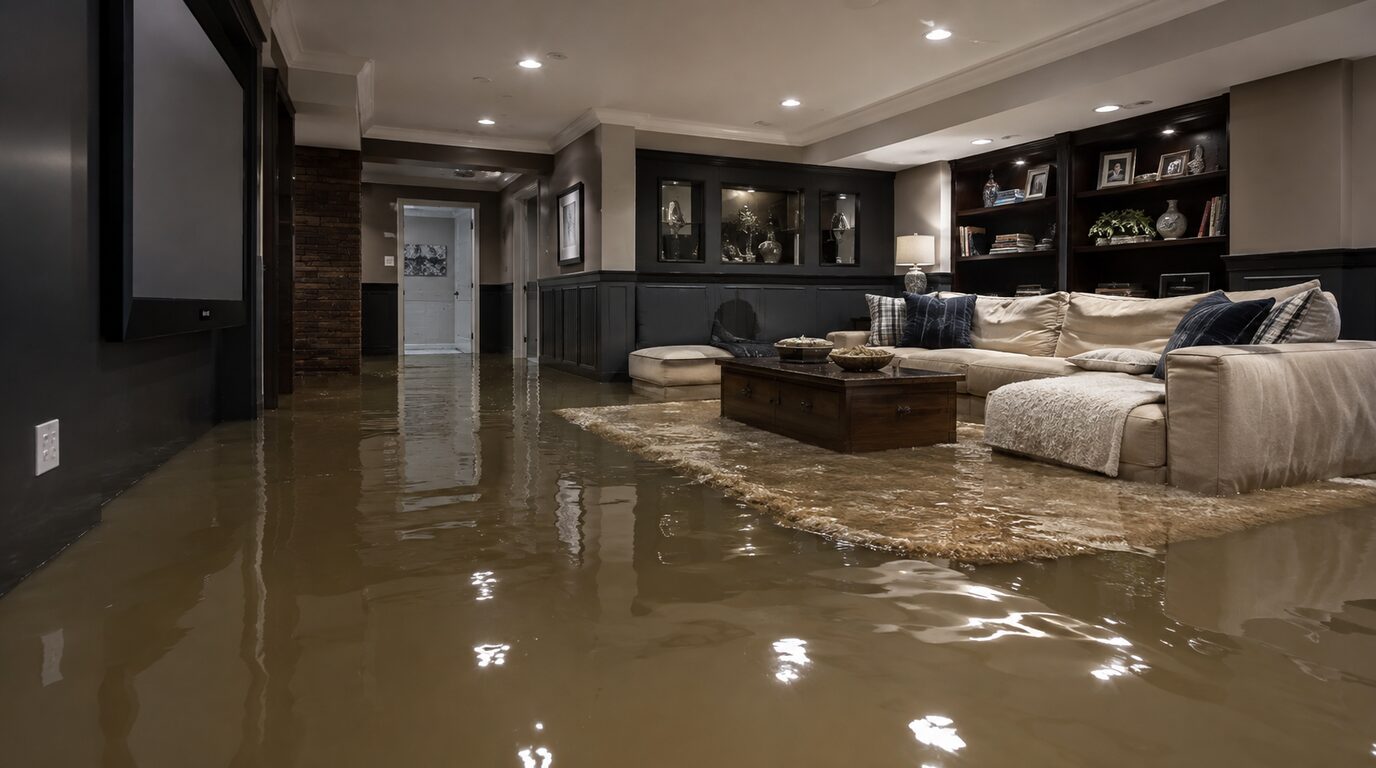
What basement water removal involves
Pumping is the visible part and the fastest. What takes the time is everything after: getting water out of the base of finished walls, out of stored contents, and out of the air in a space with no natural ventilation. Basement water removal without dehumidification usually produces a floor that looks fine and a room that smells wrong three weeks later.
Where the water hides down here
- Behind finished basement walls, in the pad and framing at floor level
- Under stored boxes, mattresses, and anything resting flat on the slab
- In the seam between the block wall and the floor, where seepage enters
- Around the furnace, water heater, and laundry hookups on the low side
Why Muncie basements take the hit
A large share of housing here predates modern foundation waterproofing and perimeter drainage. Block walls wick moisture, the wall-floor joint is the natural entry point, and many Muncie homes depend on a single sump pump with no secondary pump and no battery backup. During a storm that runs for hours, the pump either keeps up or it does not, and there is no middle outcome.
On rental property the sequence adds a delay. Basements in rentals are often storage and mechanical space rather than lived-in space, so nobody is down there daily, and the water has time to work into materials before anyone calls the owner.
What to do before help arrives
- Do not go down if water is near outlets, the panel, or a running appliance. Cut power to the basement circuits only if the panel is reachable from a dry position.
- Leave a sump pump running if it is working and safely powered; unplugging it removes the only thing helping.
- Photograph the water level against the wall before it drops, and list what was stored on the floor while you remember.
Our approach
Drying a space that has no airflow of its own
Pump out and clear the floor
Standing water comes out, then contents are moved off the slab so the floor and the items both have a chance to dry.
Open what is holding water
Wet base trim and the lower section of finished wall are removed where readings show saturation, rather than leaving a sealed cavity to dry on its own.
Dehumidify and monitor
Below grade, dehumidification matters more than air movement alone. Readings continue on the slab, framing, and air until the space holds a dry level.
Standing water downstairs?
Call and describe the depth, and we will tell you what to move first.
Basement questions we hear in Muncie
Can a basement dry out on its own if I open the windows?
Rarely, and outside air often makes it worse in a humid Indiana summer by adding moisture to a cool space. Below-grade drying needs dehumidification that pulls water out of the air and the materials. Left to itself, a basement usually reaches a damp equilibrium instead of drying.
What gets removed and what can be saved?
Cardboard, particleboard, upholstered items that sat in water, and wet carpet pad generally go. Plastic totes, metal, sealed hard goods, and most furniture on legs can usually be cleaned and dried. Anything with sentimental value gets set aside for a decision rather than tossed by default.
My sump pump kept running. Why did it still flood?
A pump has a capacity, and a long storm can deliver water faster than a single unit moves it. Discharge lines also freeze, clog, or run back toward the house. When the pump was working and the basement still took water, the next questions are discharge routing, pit inflow, and whether a backup pump belongs there.