Muncie, Indiana
Emergency Water Extraction and Water Removal in Muncie
Water on the floor right now is the one situation where reading can wait. Shut off the source if it is safe, keep people away from anything electrical, and call.
First moves while the water is still moving
Two things decide how much of your home avoids further damage during an active leak: how quickly the source stops, and how quickly the water leaves. Everything else can be sorted afterward. If you can reach a shutoff without walking through water near an outlet or appliance, close it. If you cannot, leave it alone and say so when you call.
What water removal actually involves
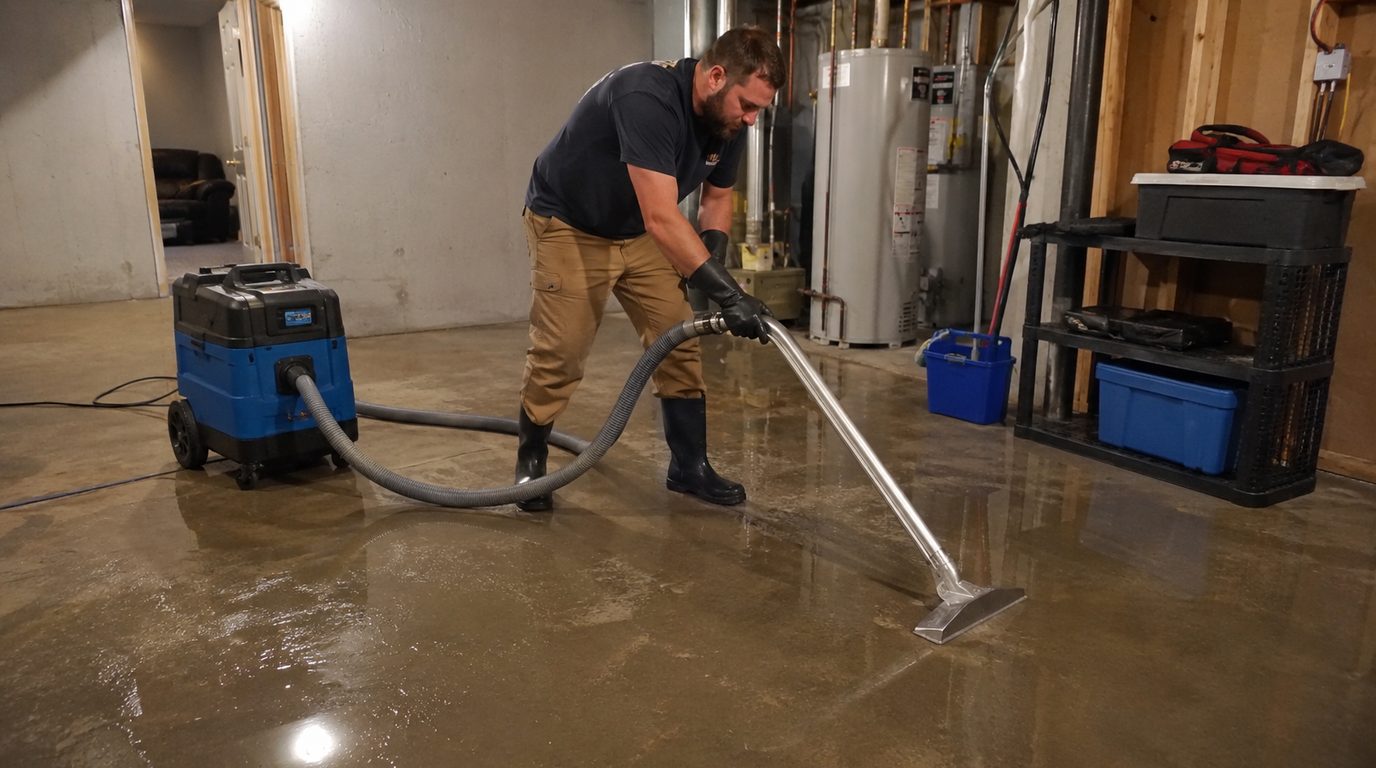
Extraction is more than a wet vacuum passing over a floor. Water sits in three places: on the surface, inside porous materials, and in cavities where nothing is visible. Surface removal is quick. Pulling water back out of pad, subfloor, and the base of walls takes weighted extraction, sometimes removal of the covering, and then a drying setup sized to the space rather than whatever fits in a van.
Where the water goes when nobody is watching
- Under the edge of finished flooring and along the length of a seam
- Through a floor penetration into the level below, including between apartment units
- Into wall cavities by wicking up drywall from the floor
- Along a joist bay, ending in a room nowhere near the leak
Why speed matters more on Muncie rental property
An owner-occupied house usually gets a call within minutes because someone is standing in it. A rental unit between tenants, a house empty over a semester break, or a lower unit whose occupant is at work can sit with water running for hours. By the time the call comes, extraction is the same job but the drying plan is larger, and more material has crossed the line from dryable to removable.
What to do before help arrives
- Stay out of standing water that touches outlets, cords, or a panel, and do not switch anything on to check whether it works.
- Close the source valve or the main shutoff if reaching it does not mean crossing water near electrical equipment.
- Lift small items, put foil or blocks under furniture legs where you safely can, and photograph the extent before anything is moved.
Our approach
Get it out, then find what it left behind
Stop the spread
Source control and containment first, so the affected area stops growing while extraction is set up.
Extract in passes
Surface water, then weighted extraction over carpet and pad, then targeted removal where a covering is holding water against the subfloor.
Set the drying plan
Readings determine how many air movers and dehumidifiers the space needs and where wall or floor material has to be opened.
Water on the floor right now?
Call and we will talk through what to shut off and what to keep clear of.
Questions about emergency extraction
I have a shop vacuum. Can I just do it myself?
For a small spill on a hard floor, often yes. The limit is porous material: a shop vacuum pulls surface water but leaves the pad, subfloor, and wall base wet, and those are what cause the later problems. If the water crossed carpet, reached a wall, or moved between rooms, surface removal alone will not finish it.
Is water removal the same thing as water extraction?
They describe the same stage of the work, and this page covers both. Removal or extraction gets the standing and absorbed water out. Drying is the stage that follows, and restoration is the wider process that includes both plus documentation and the handoff to repairs.
What should I do about a unit below the leak?
Check it early, even if nothing is visible on the ceiling yet. Water traveling through a floor assembly often appears at a light fixture or a wall edge rather than directly under the source. If there is any sag or bulging in a ceiling, keep people out of that room and mention it on the call.