Muncie, Indiana
Sewage Backup Cleanup in Muncie, IN
A backup through a floor drain or fixture is a health matter before it becomes a cleanup job in your home. Keep people and pets out of the area, leave the cleaning to protective equipment, and call.
Why this one is not a mop-and-bleach job
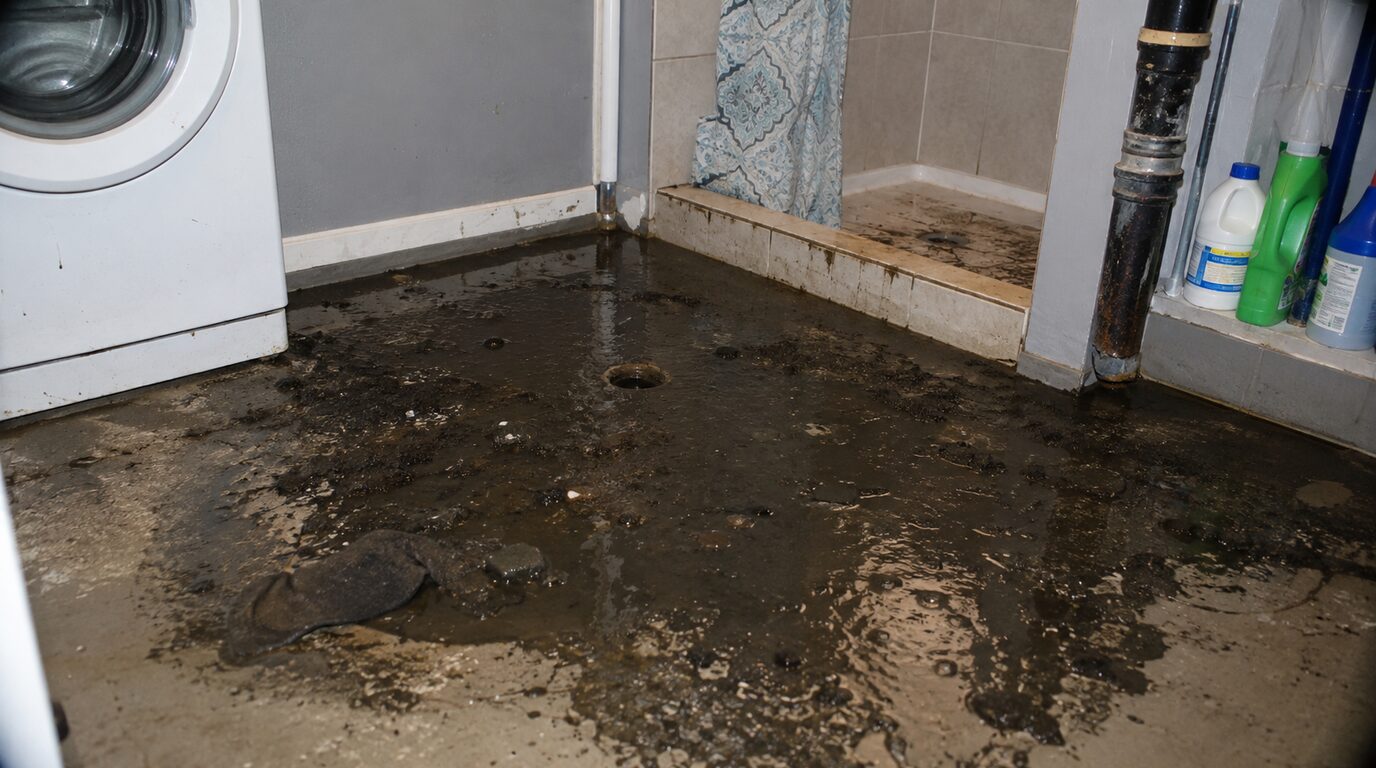
Water that has been in a sewer line carries bacteria and other pathogens, and it is classified as grossly contaminated. Porous materials that absorb it cannot be disinfected back to a safe condition, no matter how they look afterward. Household cleaner on the surface leaves the contamination inside the material and puts the person doing the mopping in contact with it.
What sewage cleanup involves
The work runs in a strict order because cross-contamination is the main risk. The affected area is contained and access is controlled, technicians work in protective equipment, contaminated water and material are removed and bagged for proper disposal, hard surfaces are cleaned and treated, and only then does drying begin. Skipping straight to fans spreads what should have been removed.
Generally removed after a backup
- Carpet and pad in the affected area, without exception
- Drywall and insulation up to a line above the contamination
- Particleboard, cardboard, and porous stored contents that were touched
- Wood-based flooring where the water sat in the seams
Backups in Muncie basements and rentals
The most common version here starts at a basement floor drain during a heavy rain, when the system takes on more than it can carry and the lowest opening in the house becomes the relief point. Older lines with root intrusion or partial blockages back up more readily, and much of the housing stock in Muncie is served by lines that have been in the ground a long time.
In rentals, the first sign is often a tenant reporting a smell or a slow drain rather than visible water. Treat those reports as urgent, because a partial blockage on the main line does not fix itself and the next heavy rain finishes the job.
What to do before help arrives
- Keep everyone out of the affected area, including pets, and close the door if there is one.
- Stop using water in the building: no toilets, laundry, or dishwasher, since every drain feeds the same line.
- Do not run a fan in the area. Moving air across contaminated material spreads it through the rest of the building.
Our approach
Contain, remove, clean, then dry
Contain the area
The affected space is isolated and access controlled so contamination does not travel through the rest of the building on shoes and equipment.
Remove and dispose
Contaminated water and porous material are extracted, bagged, and taken out by a route that does not cross clean space.
Clean, treat, and dry
Hard surfaces are cleaned and treated before any drying equipment runs, and readings then confirm the structure is dry.
Something came up through the drain?
Keep the area closed off and call. This one should not wait.
Questions about sewage backups
Is it safe to stay in the house?
The rest of the building is usually usable if the affected area is contained and nobody enters it, and if water use stops so the backup does not continue. If the contamination reached living space, a bedroom, or the only bathroom, staying elsewhere until cleanup is finished is the sensible choice. Anyone with a health condition should keep well clear.
It was only a small amount. Can I clean it myself?
A very small backup onto a sealed hard floor can sometimes be handled with proper protection and disinfection. Once it reaches carpet, drywall, or stored belongings, surface cleaning no longer reaches the contamination. The safest test is simple: if it soaked into something porous, that material needs removing rather than cleaning.
Do you fix the line that backed up?
Clearing or repairing the drain line is plumbing work and needs a plumber, ideally before cleanup finishes so the problem does not repeat mid-job. Our part is the contamination: containment, removal, cleaning, and drying. Tell us on the call whether a plumber has already been out.