
Muncie, Indiana
Roof Leak Water Damage in Muncie, IN
Water from above rarely lands where it entered. It runs down rafters and along the top of a ceiling until it finds a seam, a fixture, or a wall. A brown ring on the ceiling is the end of the trail, not the start of it.
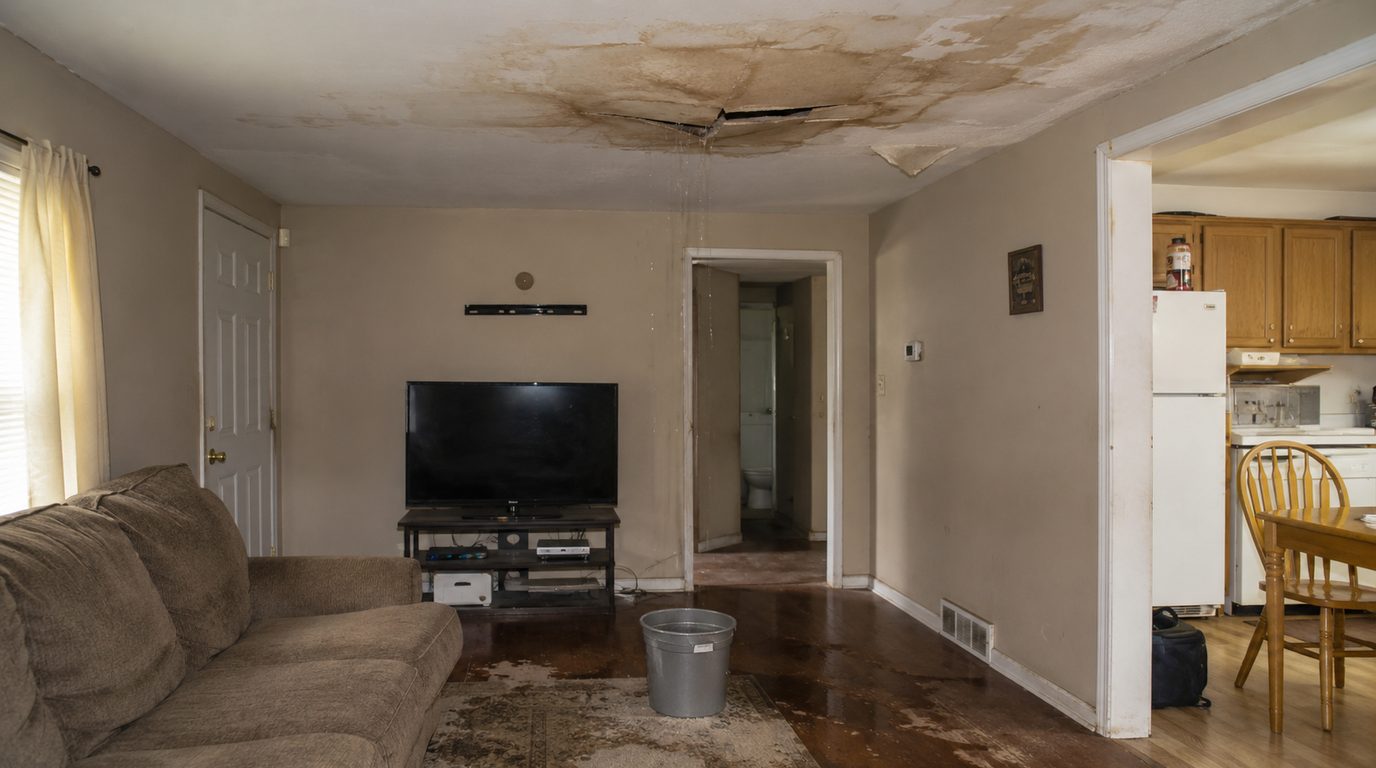
A stain on the ceiling means the attic already got wet
By the time drywall discolors, insulation above it has usually been holding water for a while. Wet blown insulation compacts and stops insulating, and it keeps the ceiling damp long after the rain stops. That is why a roof leak that looks minor from the living room can still need the ceiling opened.
What the cleanup involves
The roof repair itself belongs to a roofer, and it comes first when weather allows, because drying under an active leak is wasted effort. Our side is what the water did on the way in: saturated insulation, wet framing, ceiling material that has lost its strength, and any wall cavity the water traveled down.
Checked on a roof leak call
- Attic insulation and the top of the ceiling assembly across the wet zone
- Rafters, sheathing, and any framing showing staining or active drips
- The wall cavities below, where water runs down after crossing the top plate
- Light fixtures, ceiling fans, and boxes in the affected area
- Stored items in the attic, which often reveal the true extent before the ceiling does
Storms, older roofs, and Muncie rental property
Summer storms across central Indiana tend to arrive with wind and heavy short-duration rain. That combination lifts and loosens shingles on aging roofs, then drives water into the opening. Muncie has plenty of older housing carrying older roofs, and rental property especially, where a roof runs to the end of its life while the interior gets the attention.
Tenants often report a leak once, during the storm, and not again when it dries. Take the first report seriously, because the attic stays wet whether or not anyone sees a drip the following week.
What to do before help arrives
- Turn off power to fixtures in the wet area rather than switching them on to check.
- Put a container under an active drip and move furniture and electronics out from under the affected ceiling.
- If a ceiling is sagging or bulging, keep everyone out of that room. Do not puncture it yourself.
Our approach
Dry the assembly, not just the stain
Check above the ceiling
The attic side tells the real story: how wide the wet zone is, whether insulation is saturated, and which framing took water.
Remove what is holding water
Compacted wet insulation and ceiling material that has lost integrity come out. Sound material stays and dries in place.
Dry before anything closes up
Airflow and dehumidification run until framing and remaining materials read dry, so a new ceiling is not installed over a wet cavity.
Ceiling stain spreading after a storm?
Call and describe what is above that room.
Roof leak questions
Should I get the roof fixed before you come out?
Ideally the leak is stopped or temporarily covered first, since drying under water still coming in achieves nothing. If a roofer cannot get there quickly and the ceiling is actively taking water, call anyway. Protecting contents and limiting spread is still worth doing in the meantime.
The stain dried and stopped growing. Do I still need anything?
A stain that stops spreading means the leak paused, usually because the rain did. It does not mean the insulation and framing above dried out. A reading from the attic side settles it quickly, and it is a much smaller conversation than a ceiling replaced next spring.
Does wet insulation have to be replaced?
Usually, when it is blown or batt insulation that absorbed water. It compacts, loses its thermal value, and holds moisture against the ceiling. Replacement is generally cheaper and more effective than attempting to dry it in place, and it lets the framing above the ceiling dry properly.